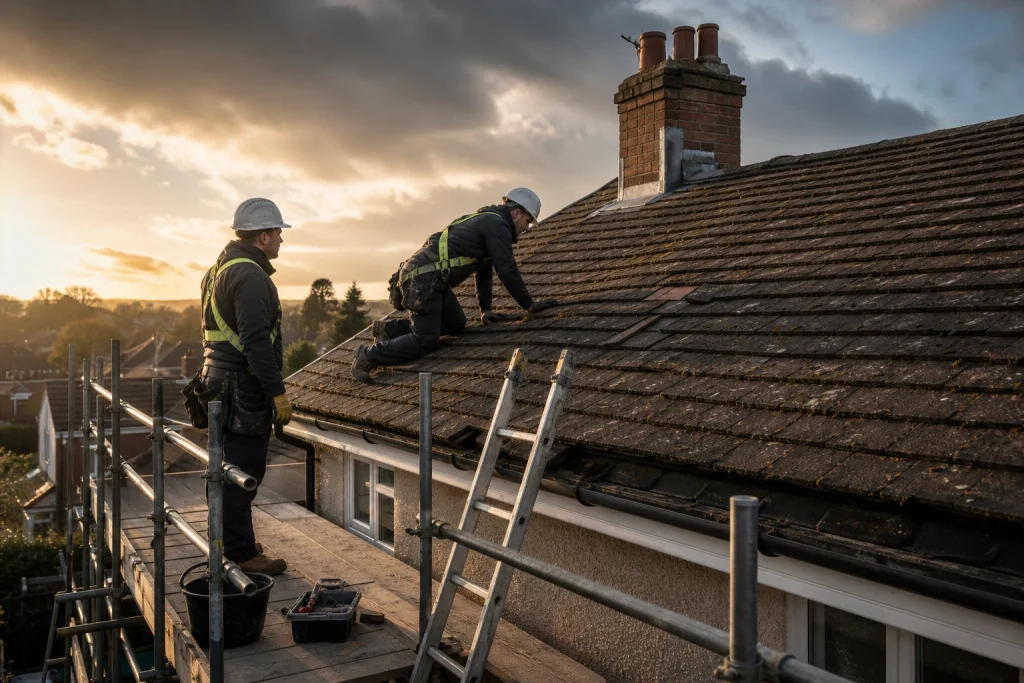
A few slipped tiles after bad weather does not always mean you need a new roof. Many roofing issues can be dealt with neatly through targeted repairs, especially when the main structure is still sound.
However, there comes a point where repeated patching stops being the best answer. Knowing the signs of an ageing roof helps you plan calmly, protect your home and ask the right questions during a professional assessment.
What separates a repair from a replacement
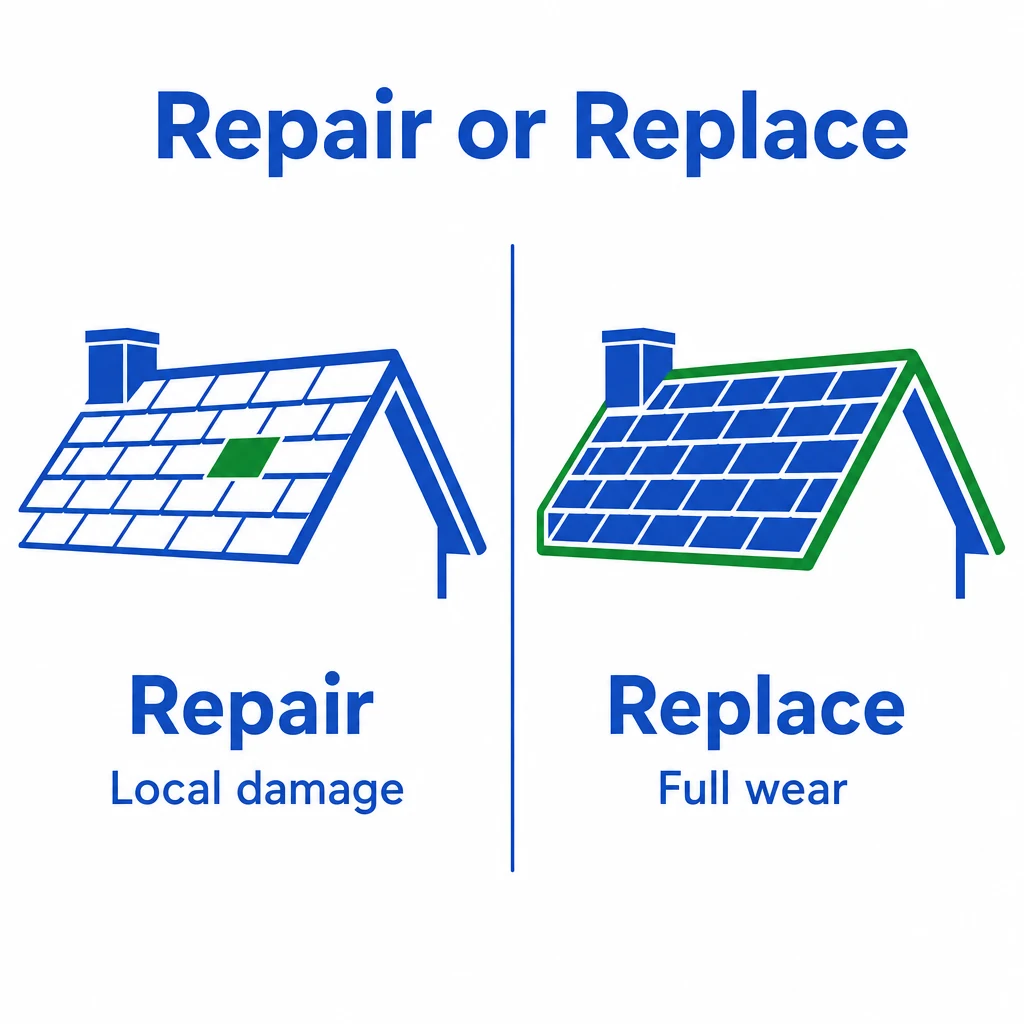
A repair usually deals with a localised problem: a cracked tile, a small area of damaged flashing, a leak around a chimney, or a short run of failed guttering. If the rest of the roof is in good condition, this kind of work can restore weather protection without touching the whole roof covering.
A full replacement becomes more likely when the problems are widespread, recurring or linked to the age and condition of the roof system as a whole. That includes the tiles or slates, battens, underlay, ventilation, leadwork, ridges, verges and roofline details.
If you are unsure which category your roof falls into, start with an inspection rather than a guess. Proper Roof’s roof repairs and re-roofs service can help identify whether a focused repair is suitable or whether replacement would give a better long-term result.
Visible signs your roof is wearing out
Some roof replacement clues are visible from ground level. You do not need to climb ladders to spot them; in fact, you should avoid doing so unless you are trained and properly equipped.
- Widespread slipped, cracked or missing tiles: One or two may be a repair job. Several across different slopes can suggest the covering is reaching the end of its useful life.
- Sagging or uneven roof lines: A roof should look consistent. Dips, waves or distortion may point to deeper structural or decking issues that need expert attention.
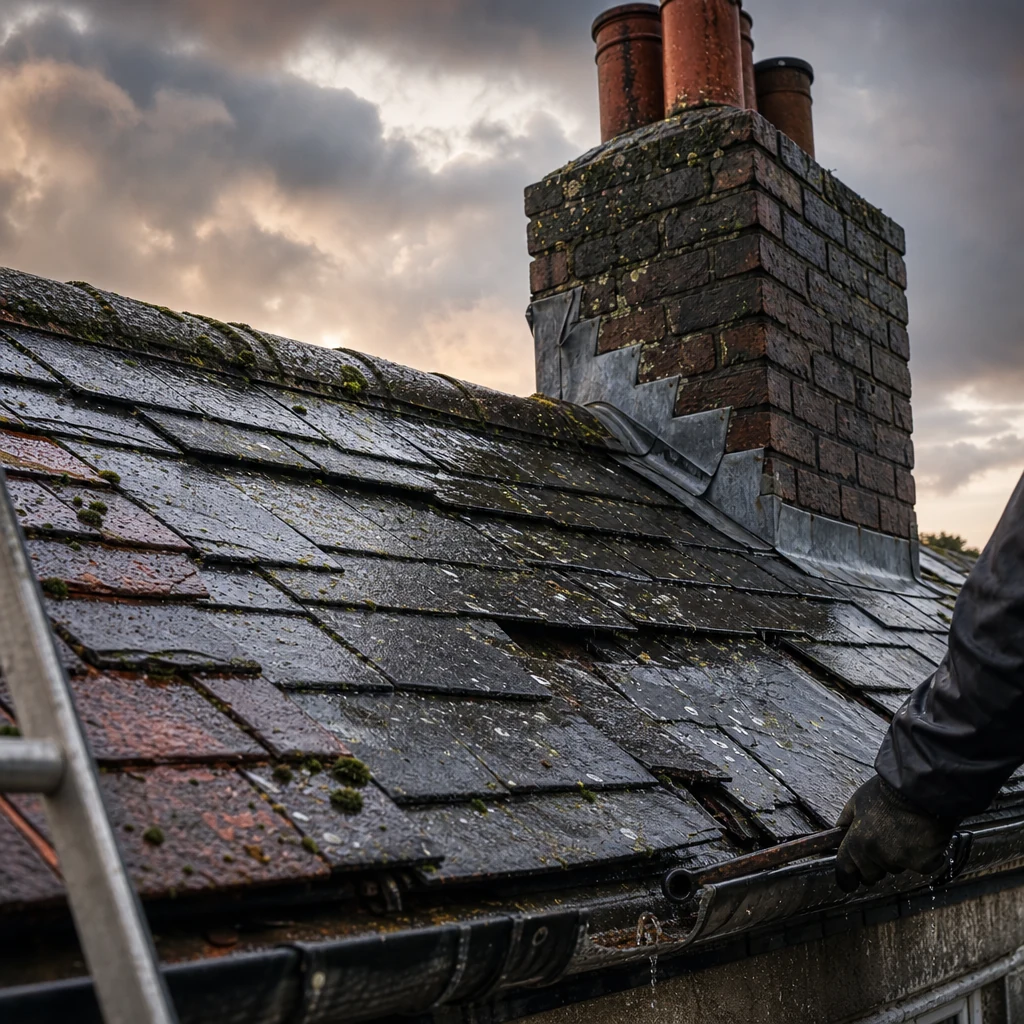
- Heavy moss with damaged surfaces: Moss alone is not always a crisis, but if tiles are becoming porous, flaky or brittle, the roof covering may no longer be performing as it should.
- Failing ridges, verges and pointing: Repeated mortar breakdown can allow water and wind to get beneath the roof covering.
- Rusting or deteriorating roof details: Flashings, fixings and valleys are key weak points when they age or loosen.
When several of these signs appear together, it is wise to ask a roofing company to assess the whole roof rather than treating each symptom separately.
Indoor warning signs you should not ignore
Roof problems often show themselves inside before they become obvious outside. Small interior marks can be easy to dismiss, but they are useful clues about how the roof is handling rain, wind and condensation.
Look out for damp patches on ceilings, staining around chimney breasts, peeling paint near upper walls, musty loft smells, wet insulation or visible daylight through the roof space. After heavy rain, check whether any marks have grown or changed colour.
Not every internal stain means a new roof is needed. A leak may come from a single flashing detail, damaged valley or chimney defect. For example, issues around stacks can often be dealt with through specialist chimney repairs. The important point is to have the source traced properly, because water can travel before it appears indoors.
If leaks are appearing in several places, or if the underlay has become brittle and unreliable across large areas, replacement may be the most sensible route.
How age, materials and previous work affect the decision
Different roofs age in different ways. Slate, clay tiles, concrete tiles, flat roof membranes and heritage materials all have their own behaviour, and exposure plays a major role. A roof that faces frequent wind-driven rain may show wear sooner than a more sheltered one.
Previous workmanship also matters. A roof that has had many small repairs over the years may include mismatched materials, uneven detailing or hidden weak points. None of this automatically means replacement is required, but it does make a full assessment more important.
On older or character properties, it is especially important to preserve the correct appearance while improving weather performance. Proper Roof’s heritage roofing service can help where traditional materials, sensitive detailing or period features need careful handling.
Roofline condition should be considered too. Fascias, soffits and gutters help manage rainwater and ventilation. If they are failing alongside the roof covering, it may be practical to review the full roof edge system. See fascias, soffits and gutters for more on these supporting parts.
When a new roof is the better long-term option
A new roof is not about replacing for the sake of it. It is about choosing the option that gives your home reliable protection, improves the roof structure where needed and reduces the cycle of repeated call-outs for connected problems.
Replacement is often worth discussing when damage is spread across several elevations, leaks keep returning, underlay has failed, battens are deteriorating, or the roof has already had multiple repairs that no longer hold. It may also be appropriate if you are planning other major home improvements and want the roof brought up to a dependable standard first.
A professional assessment should explain what is happening, what can be repaired, what should be replaced and why. For homeowners researching new roofs, this advice stage is valuable because it turns uncertainty into a clear plan.
Good replacement work also looks at ventilation, rainwater flow, roofline details and safe access. The aim is a roof that performs as a complete system, not just a new layer of tiles.
What to expect from a professional roof assessment
A proper roof assessment should be methodical and clear. The roofer will usually review the roof covering, ridges, verges, valleys, flashings, chimney details, gutters, fascias, soffits and visible internal signs such as loft dampness or staining.
You should expect straightforward advice in plain language. If repair is suitable, that should be explained. If replacement is recommended, the reasons should be linked to the condition of the roof rather than vague statements.
Helpful questions to ask include:
- Is the problem localised or widespread?
- Are the battens, underlay and ventilation likely to need attention?
- Are the chimney, gutters or roofline contributing to the issue?
- Would repair be a sound option, or only a short-term patch?
- What materials are appropriate for the property?
This approach helps you make a confident decision based on evidence, not pressure.
- A single leak or slipped tile may only need a repair, but widespread defects can point to replacement.
- Interior damp, recurring leaks and brittle underlay are important warning signs.
- Chimneys, gutters, fascias and roofline details should be assessed alongside the main roof.
- A professional inspection should explain whether repair, re-roofing or a full new roof is the right option.
Frequently asked questions
Does one roof leak mean I need a full replacement?
Not necessarily. A single leak may come from a cracked tile, flashing detail, valley or chimney area. Replacement is more likely when leaks are recurring, widespread or linked to ageing materials across the roof.
Can part of a roof be replaced instead of the whole roof?
Yes, in some cases. If one section has failed but the rest is sound, a partial re-roof may be suitable. A roofer can check whether the new section will integrate properly with the existing roof.
Is moss a sign that my roof needs replacing?
Moss alone does not automatically mean replacement is needed. The concern is whether it is hiding cracked tiles, holding moisture or growing on roof coverings that are already brittle or porous.
What should I do if I think my roof is near the end of its life?
Book a professional inspection before making assumptions. A clear assessment will show whether targeted repairs are enough or whether planning a new roof is the more dependable choice.
Ready for clear roof advice?
If your roof is showing several warning signs, Proper Roof can assess it properly and explain your options with care.