A slipped tile, a damp patch or a drip in the loft can make a roof problem look simple. It is tempting to think the answer is just to patch the place where water appears.
In reality, effective roof repairs are often about tracing the cause, not just covering the symptom. A professional approach looks at how water is getting in, how it is travelling, and what needs putting right so the same issue does not keep returning.
The visible leak is not always the starting point
Water rarely behaves in a straight line. It can enter through a damaged tile, a cracked flashing or a weak point around a chimney, then run along battens, felt, insulation or timbers before appearing somewhere completely different inside the home.
That is why a ceiling stain beneath one area of roof does not always mean the defect is directly above it. A visible patch may stop the immediate drip for a short time, but if the route of the water has not been understood, the roof may still be vulnerable during the next spell of wind and rain.
Professional roofers look for patterns: staining in the loft, lifted materials, gaps around junctions, signs of blocked drainage, and whether previous repairs have diverted water rather than solved the fault. This investigation helps turn a roof repair from a quick cover-up into a targeted, lasting solution.
If you are comparing options for roof repairs and re-roofing, it is worth choosing an approach that starts with the cause of the problem, not only the most obvious mark on the surface.
What a proper roof repair inspection should consider
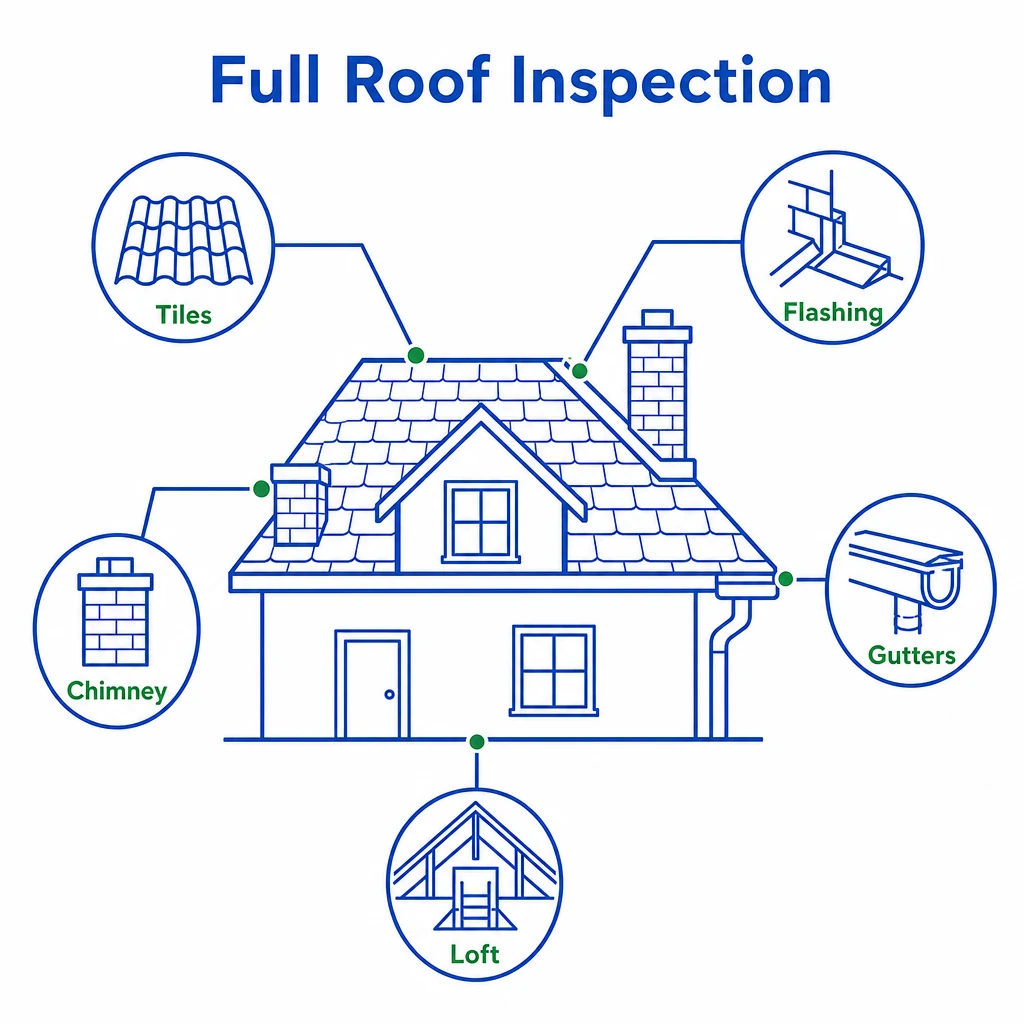
A useful inspection is methodical. It considers the roof as a working system, because every part has a role in moving water away from the building and keeping the internal structure dry.
Depending on the roof type and the nature of the problem, a roofer may check:
- Roof coverings: cracked, slipped, missing or weathered tiles and slates.
- Ridges and verges: loose mortar, gaps, movement or failed fixings.
- Flashings: weak details around walls, roof windows, valleys and chimneys.
- Underlay and battens: visible sagging, tears, rot or signs of prolonged moisture.
- Flat roof surfaces: splits, blisters, ponding water, open joints or damaged edges.
- Drainage: gutters, outlets and downpipes that may be blocked, cracked or poorly aligned.
- Internal evidence: loft staining, damp insulation, ventilation issues or timber marks.
This does not mean every repair becomes a major project. Often, the outcome is still a focused repair. The difference is that the work is guided by evidence, so the right materials and methods are used in the right place.
Common causes that hide behind a simple patch
Some roof issues look minor because the visible damage is small. However, the underlying cause may sit nearby or involve another part of the roof altogether.
For example, a damp wall close to a fireplace may point towards flashing or masonry issues rather than a broken tile. In that case, the right route may include specialist chimney repairs to address the stack, flaunching, pointing or leadwork around it.
Staining near the top of an external wall can sometimes be linked to roofline drainage. If water is overflowing or being driven back towards the building, attention may be needed to fascias, soffits and gutters as well as the roof covering itself.
Older properties can also need extra care. Materials may have moved over time, and traditional details can behave differently from modern roofing systems. Where character materials are involved, heritage roofing knowledge helps repairs respect the building while still improving weather protection.
Flat roofs have their own clues. A small tear can be the obvious defect, but water pooling, poor falls or edge details may explain why the surface has failed. Repairing only the tear without checking how water drains can leave the same area under pressure again.
Why matching materials and details matters
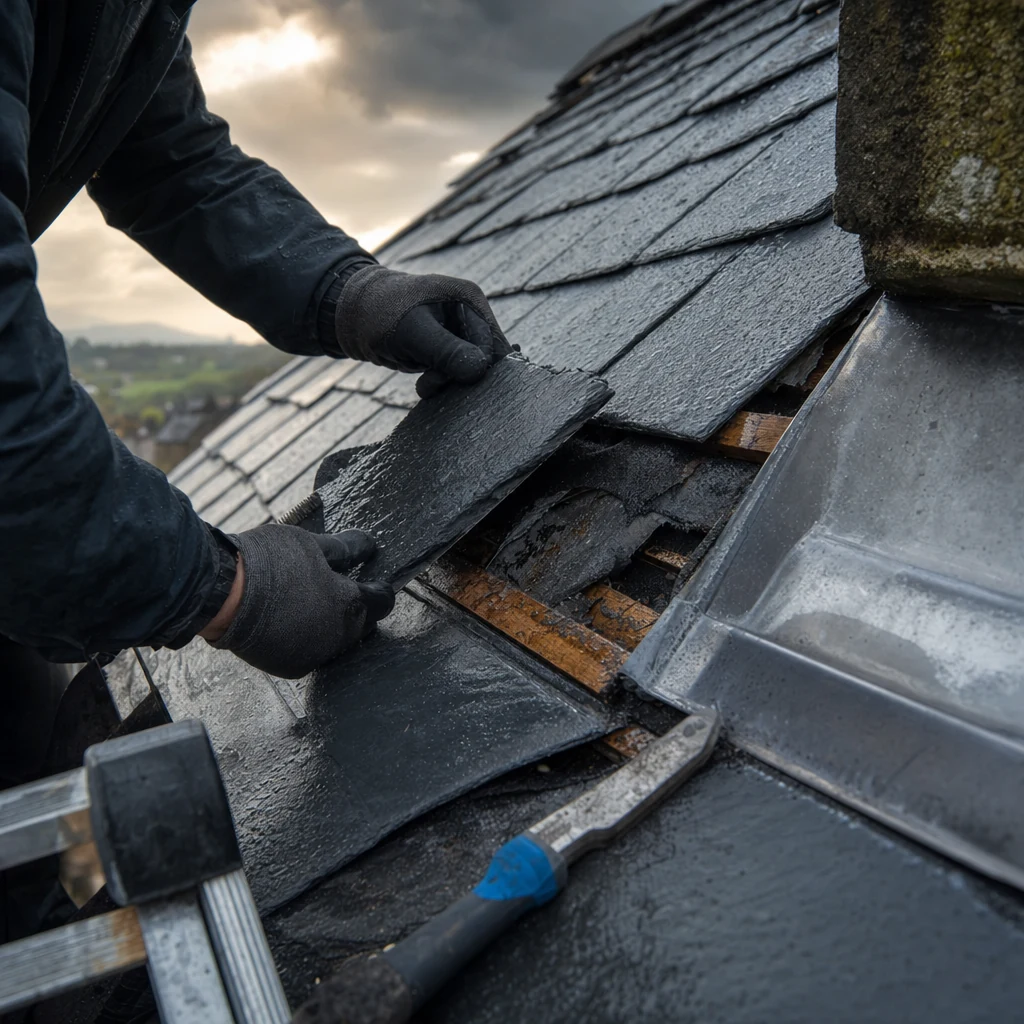
A roof repair is not only about closing a gap. It should also work with the existing roof. Tiles, slates, membranes, fixings, mortar, leadwork and ventilation all need to be compatible with what is already in place.
Poorly matched materials can create new weak points. A rigid repair on a roof that naturally moves with temperature changes can crack. A replacement tile that does not sit correctly can lift in wind. An unsuitable sealant may look neat at first but fail when exposed to sunlight and rain.
Professional roofers also consider the direction of laps, the flow of water and how one detail overlaps another. On a pitched roof, the way tiles and flashings shed water is just as important as the condition of each individual piece. On a flat roof, edges, upstands and outlets often determine whether the repair performs properly in bad weather.
There are times when repeated repairs show that a roof is reaching the end of its useful life. That does not mean a new roof is always the immediate answer, but it should be discussed honestly where it is the better long-term option. In those cases, information about new roofs can help homeowners understand the difference between repair, re-roofing and replacement.
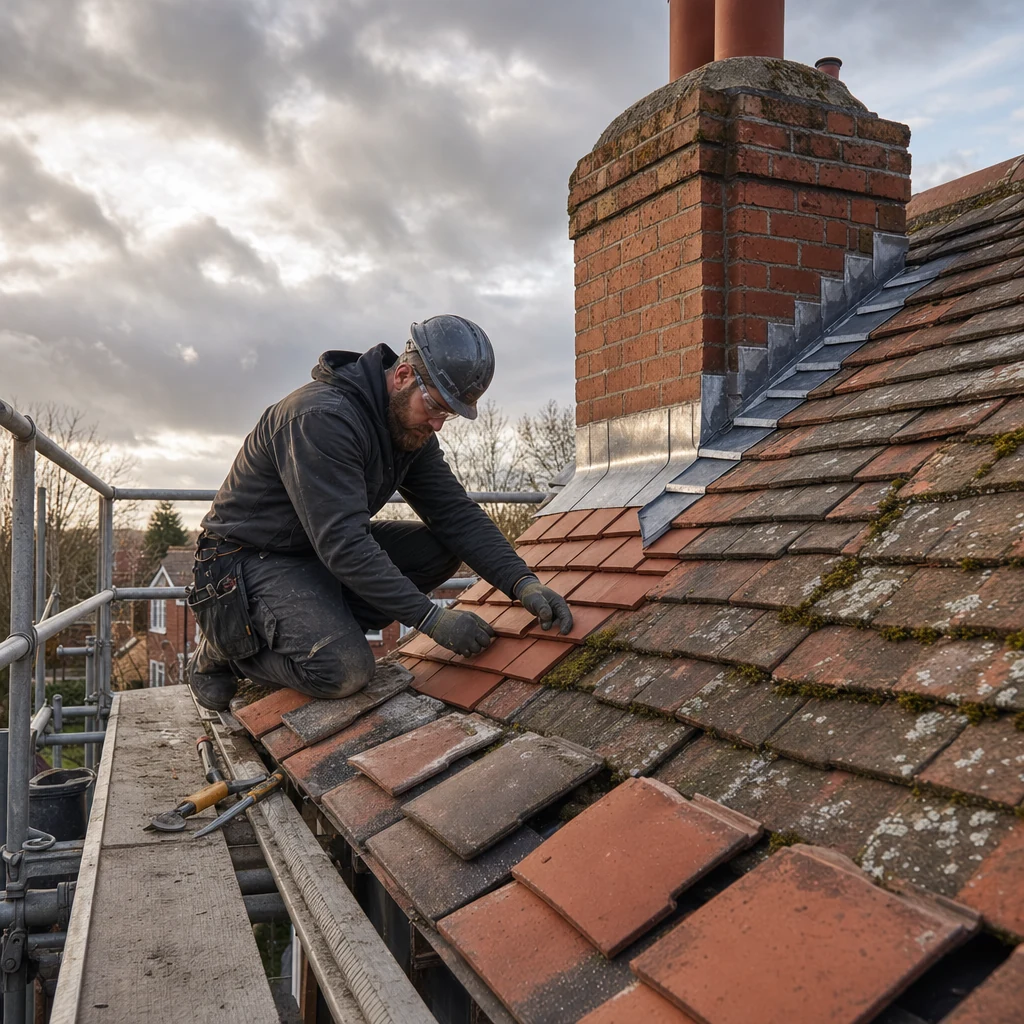
How professional roofers help prevent repeat problems
The best roof repair process is calm, practical and clear. It normally begins with listening to what the homeowner has noticed: when the leak appears, whether it happens only in wind-driven rain, and whether any work has been carried out previously.
From there, a roofer can inspect safely, identify likely entry points and explain the recommended repair. Good communication matters because it helps you understand what is being done and why. A professional should be able to describe the cause in plain English, not just say that a patch is needed.
Preventing repeat issues may involve a combination of actions. This could include replacing damaged coverings, renewing failed flashing, clearing or adjusting rainwater goods, improving a roof edge, repairing mortar, or making a flat roof detail watertight again. The scope depends on what the inspection finds.
It is also sensible to ask whether there are nearby early warning signs. A roofer may spot a tile that is secure today but badly weathered, or a gutter joint that is starting to leak. Dealing with connected defects at the same time can be a neat, efficient way to protect the roof as a whole.
What homeowners can check before calling for help
You should not climb onto a roof to diagnose a problem. However, there are useful observations you can make safely from ground level or inside the property.
- Note when the issue appears, such as during heavy rain, after wind, or only when rain comes from one direction.
- Take clear photos of internal stains, visible damp patches or any fallen materials.
- Look from the ground for obvious missing tiles, lifted edges, sagging gutters or debris in valleys.
- Check the loft if it is safe to do so, looking for daylight, staining or damp insulation.
- Avoid temporary fixes that could trap moisture or make the problem harder to trace.
These details help the roofer build a picture before and during the inspection. The more accurately the symptoms are described, the easier it is to connect them with the true cause.
Most importantly, act early. Small roof defects are often more straightforward to put right before water has had time to affect timbers, insulation or internal finishes.

- A visible leak is often only the symptom; water may be entering elsewhere.
- Professional roof repairs investigate coverings, flashings, drainage and internal signs.
- Chimneys, gutters, flat roof edges and older materials can all contribute to repeat leaks.
- The right repair should use compatible materials and respect how the roof sheds water.
- Early advice can help prevent small defects from becoming wider roof problems.
Frequently asked questions
Can a roof leak be repaired from inside?
Internal measures may reduce dripping temporarily, but they rarely solve the cause. A proper repair usually needs the external entry point to be found and made weatherproof.
Why does my roof only leak in heavy wind and rain?
Wind-driven rain can push water under lifted tiles, into weak flashings or through small gaps that normal rainfall may not expose. This is why the weather conditions matter when diagnosing the problem.
Is one missing tile a serious issue?
It can be. A missing tile leaves the underlay and structure more exposed, especially during poor weather. It is best to have it checked before water causes further damage.
How do I know if I need a repair or a re-roof?
A roofer will look at the age, condition and extent of the defects. Isolated damage may suit repair, while widespread failure or repeated leaks may point towards re-roofing.
Need a roof problem properly checked?
If you have noticed a leak, slipped tile or damp patch, Proper Roof can help identify the cause and recommend the right repair.