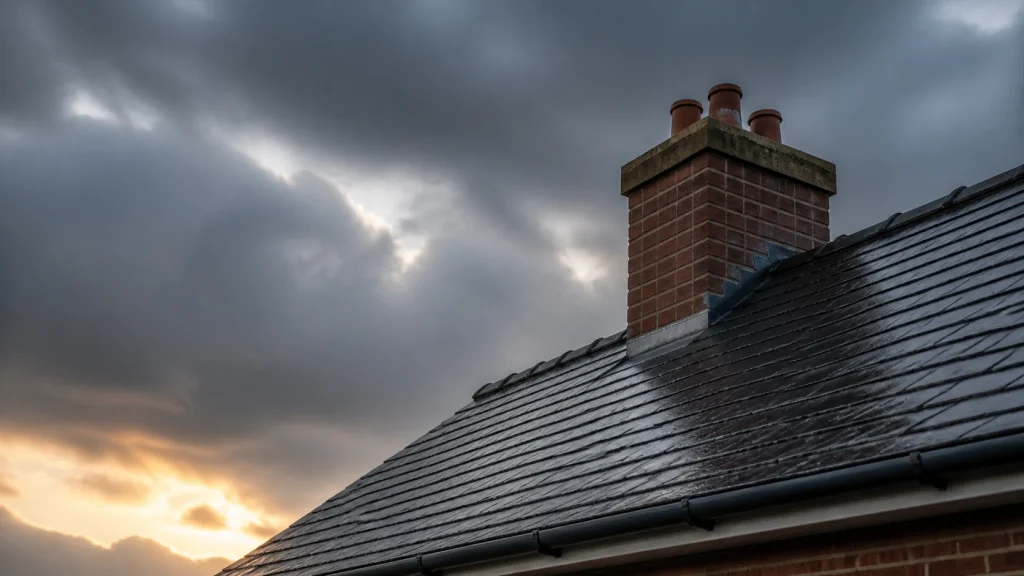
A chimney is one of the hardest working parts of a roof. It rises through the roof covering, faces wind and rain from every side, and has several junctions where water must be kept under control.
When people think about leaks near a chimney, they often think first about flashing. Flashing matters, but the condition of the brickwork and mortar is just as important. Good chimney pointing helps the whole roofline stay dry by keeping water out of the masonry before it has a chance to travel into the roof structure.
What chimney pointing actually does
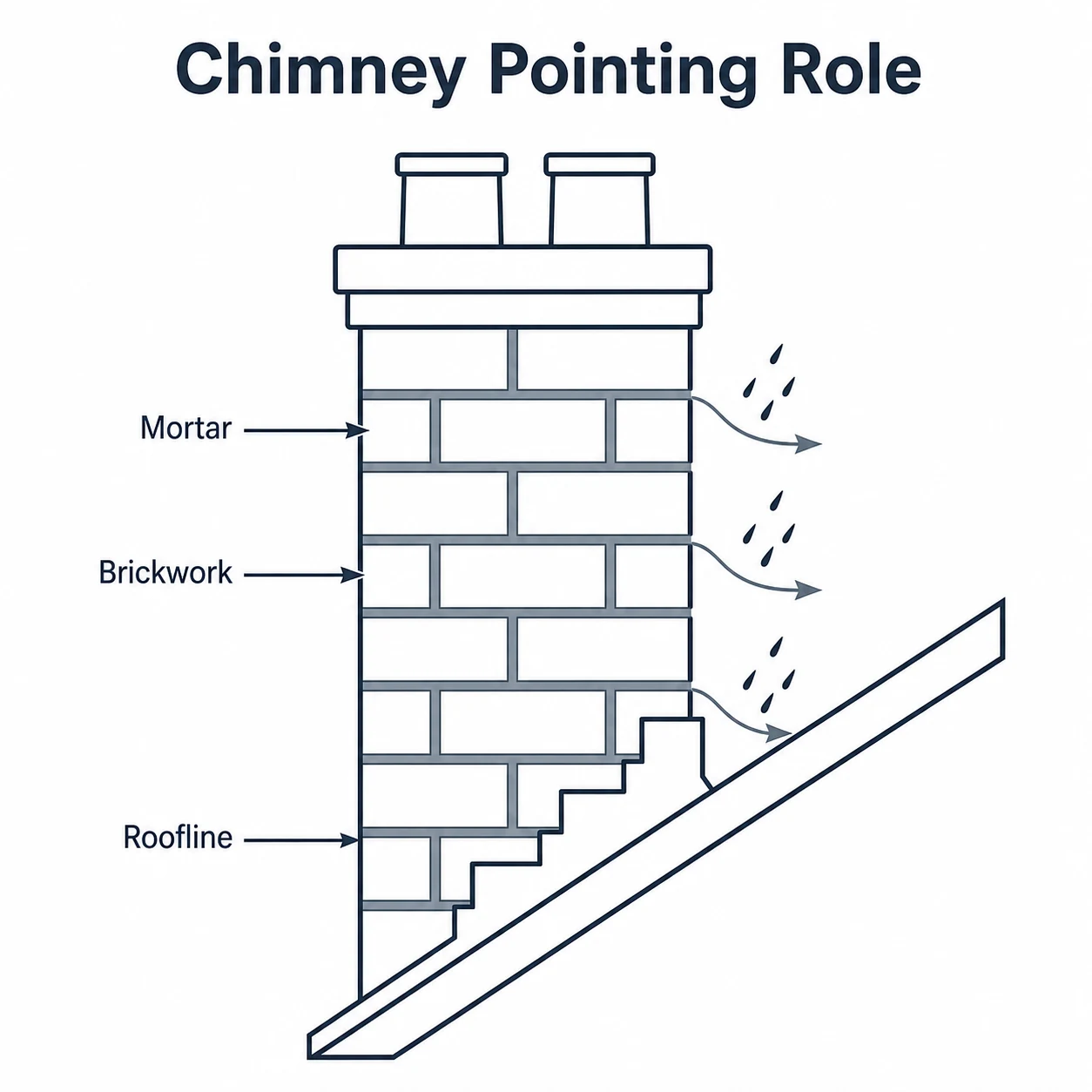
Chimney pointing is the external mortar finish between the bricks or stones of a chimney stack. Its job is simple, but important. It binds the visible masonry together, sheds rain from the face of the stack, and helps stop moisture getting into open joints.
Over time, mortar can weather, crack, crumble or pull away from the edges of the masonry. This is normal on exposed chimneys because they take the full force of rain, frost, sun and wind. Once gaps appear, water can soak deeper into the stack instead of running off the surface.
That matters because chimney masonry is not separate from the roof. The stack passes through the roof covering, which means moisture in the chimney can affect nearby battens, underlay, timbers, plaster and insulation. Keeping the pointing sound is therefore part of keeping the roof watertight, not just part of making the chimney look tidy.
If the mortar has begun to fail, Proper Roof can assess the stack as part of its chimney repair service, checking the pointing alongside other common chimney issues.
How poor pointing can lead to roof leaks
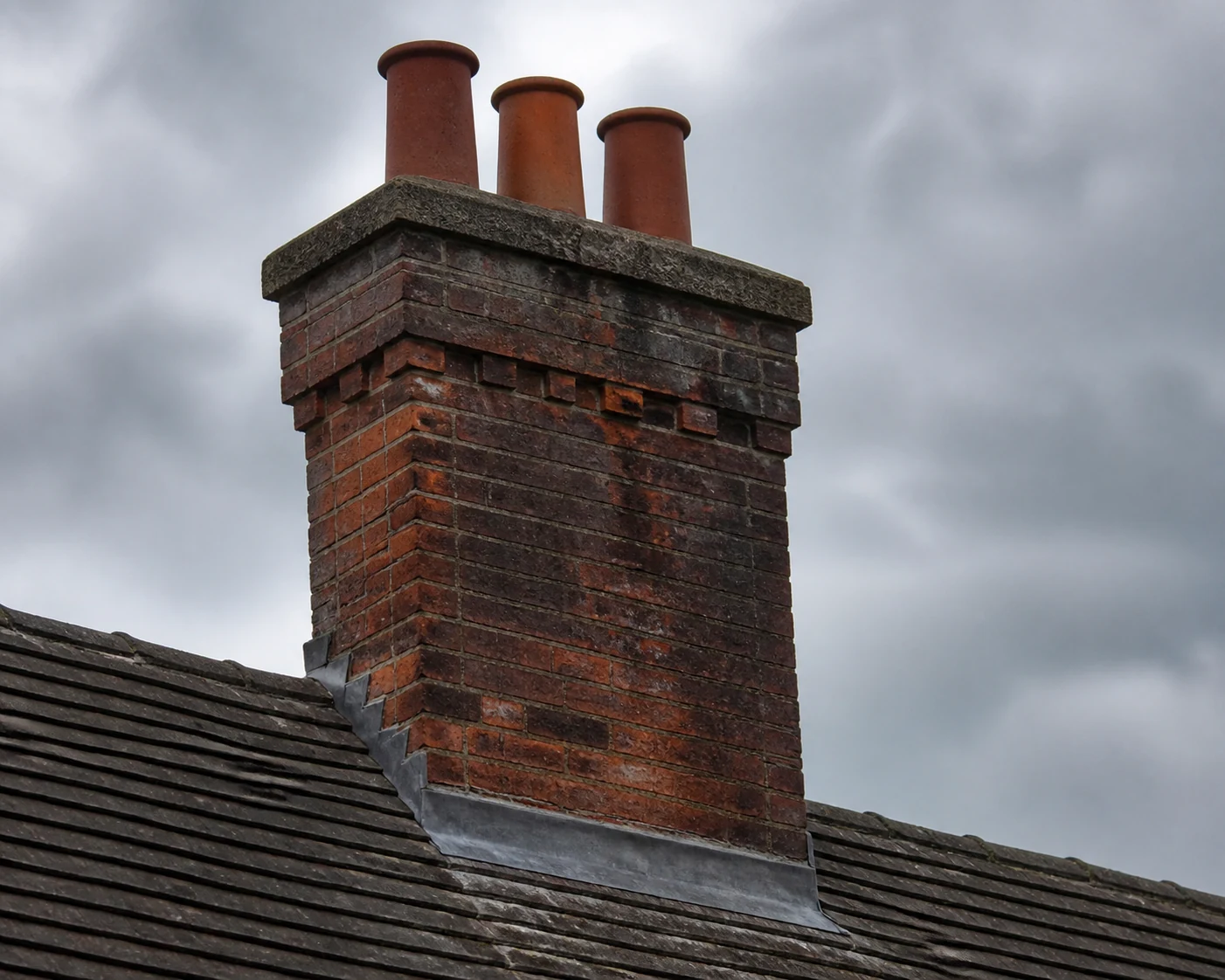
Water does not always enter a roof in the place where it shows indoors. A damp patch near a chimney breast or ceiling edge may come from a small weakness higher up, then track along timber, felt or plasterboard before becoming visible.
Failed pointing gives rain a route into the chimney stack itself. Once inside, moisture can move through porous masonry and find nearby weaknesses around the roof opening. In cold weather, trapped moisture can also expand and make small defects worse. The result may be damp staining, musty smells, damaged plaster, wet insulation or a leak that appears only during heavy or wind driven rain.
This is why a chimney leak should not be treated as one single fault without proper inspection. The flashing, soakers, back gutter, capping, flaunching, pots and pointing all work together. If one part is repaired while another is left open to the weather, water may still find a path through.
A good repair starts with diagnosis. If water is already showing inside, the wider roof area may need checking too. Proper Roof explains this broader approach in its guide to why professional roof repairs go beyond a visible patch.
Signs your chimney pointing may need attention
You do not need to climb onto a roof to notice that a chimney may need work. Many early warning signs can be seen from ground level, especially after rough weather. If anything looks unsafe, loose or unstable, it is best to arrange a professional inspection rather than trying to check it yourself.
- Mortar joints look recessed, cracked or crumbly.
- Small pieces of mortar appear in gutters, on lower roof areas or around the property.
- Bricks or stones look damp for longer than the surrounding roof materials.
- There is staining on the chimney breast, nearby ceiling or upper wall.
- The chimney has vegetation, moss or debris growing from open joints.
- The stack looks uneven, weathered or tired compared with the rest of the roofline.
Some symptoms point directly to pointing, while others may involve several parts of the chimney. For example, loose mortar can appear alongside cracked flaunching or tired leadwork. A proper inspection helps separate cosmetic ageing from defects that could allow water in.
It is also worth taking action before a small gap becomes a larger repair. Fresh, neatly matched pointing can strengthen the weather face of the stack and reduce the chance of moisture reaching more vulnerable parts of the roof.
Why repointing is different from covering the problem
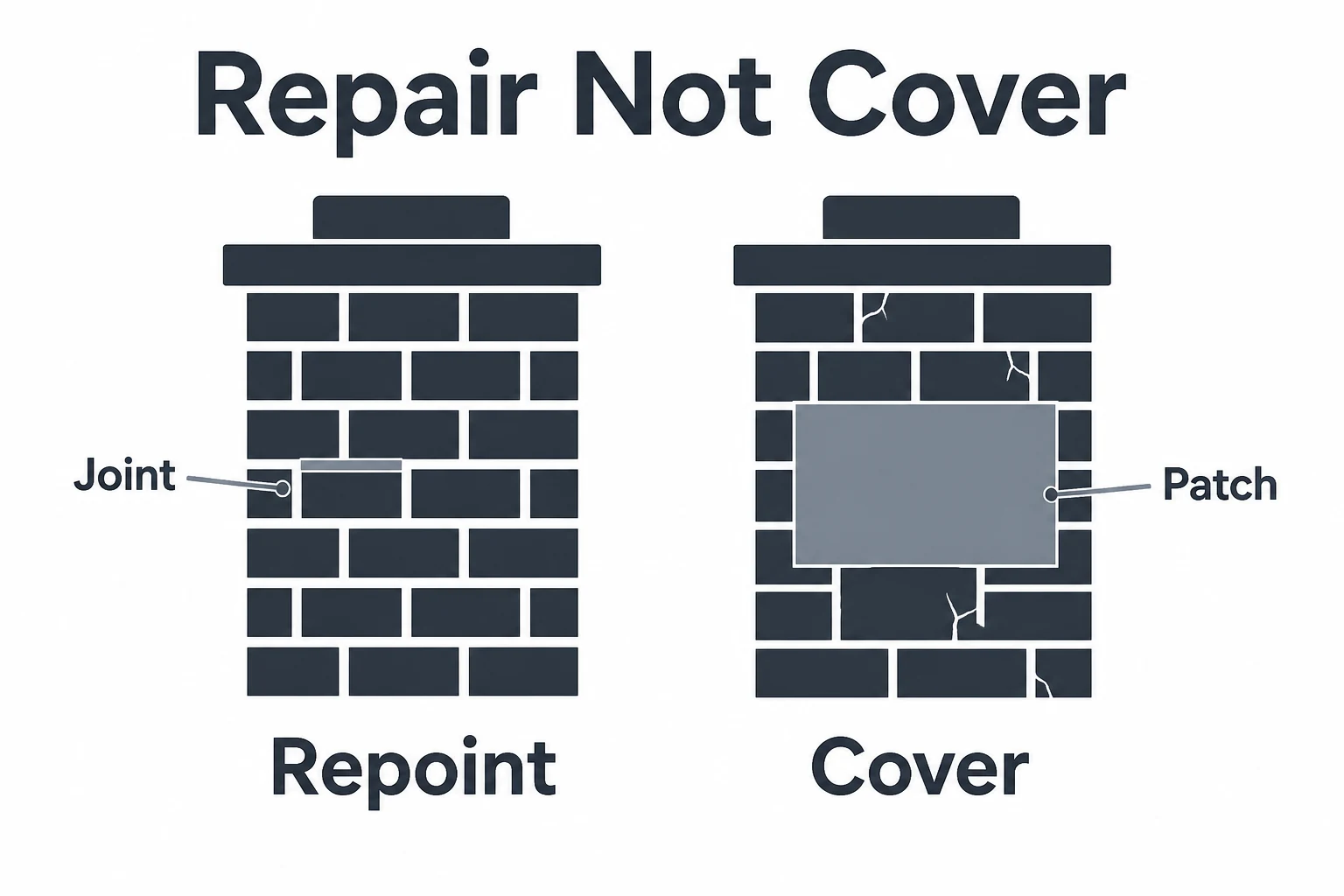
Chimney repointing is not just a matter of smearing new mortar over the surface. Done properly, loose and defective mortar is removed to a suitable depth, the joints are prepared, and new mortar is placed so it bonds with the existing masonry. The finish should suit the type and age of the chimney, while encouraging rain to shed away from the joints.
Surface filling can look acceptable for a short time, but it may not solve the problem. If failing mortar remains behind a thin outer layer, moisture can still sit inside the joint. Poorly matched mortar can also weather differently from the original masonry, which may leave the stack vulnerable over time.
Good workmanship is especially important where the chimney is older, exposed or built with materials that need a sympathetic approach. In some cases, the stack may need more than repointing. There may be loose brickwork, damaged pots, failing flaunching, defective lead details or issues with the roof covering around the chimney.
That is why chimney pointing should be viewed as part of a complete roofline repair, not as a quick cosmetic patch. Where the leak has affected tiles, slates, underlay or nearby roof structure, Proper Roof may also recommend suitable roof repair work to restore the whole area properly.
The role of moisture control around the roofline
A dry roofline depends on more than one material. Tiles or slates shed most of the rain, gutters move water away, leadwork protects junctions, and masonry must resist the weather where the chimney rises through the roof. When all of these details are in good condition, water has a clear route off the building.
Pointing supports that system by reducing unnecessary moisture in the chimney stack. If the masonry stays drier, there is less chance of water travelling sideways into vulnerable junctions. There is also less strain on adjacent details, because the chimney face is doing its share of the work.
Gutters and rainwater goods matter here too. Overflowing gutters can splash masonry and saturate lower roof edges, while blocked outlets can leave water where it should not sit. If chimney damp appears alongside overflowing or damaged rainwater goods, it may be useful to consider the condition of fascias, soffits and gutters as part of the same roofline check.
The aim is not to replace one repair with another. It is to understand how the roof manages water. When pointing, flashing, coverings and drainage all work together, leak risk is much easier to control.
When to arrange a chimney inspection
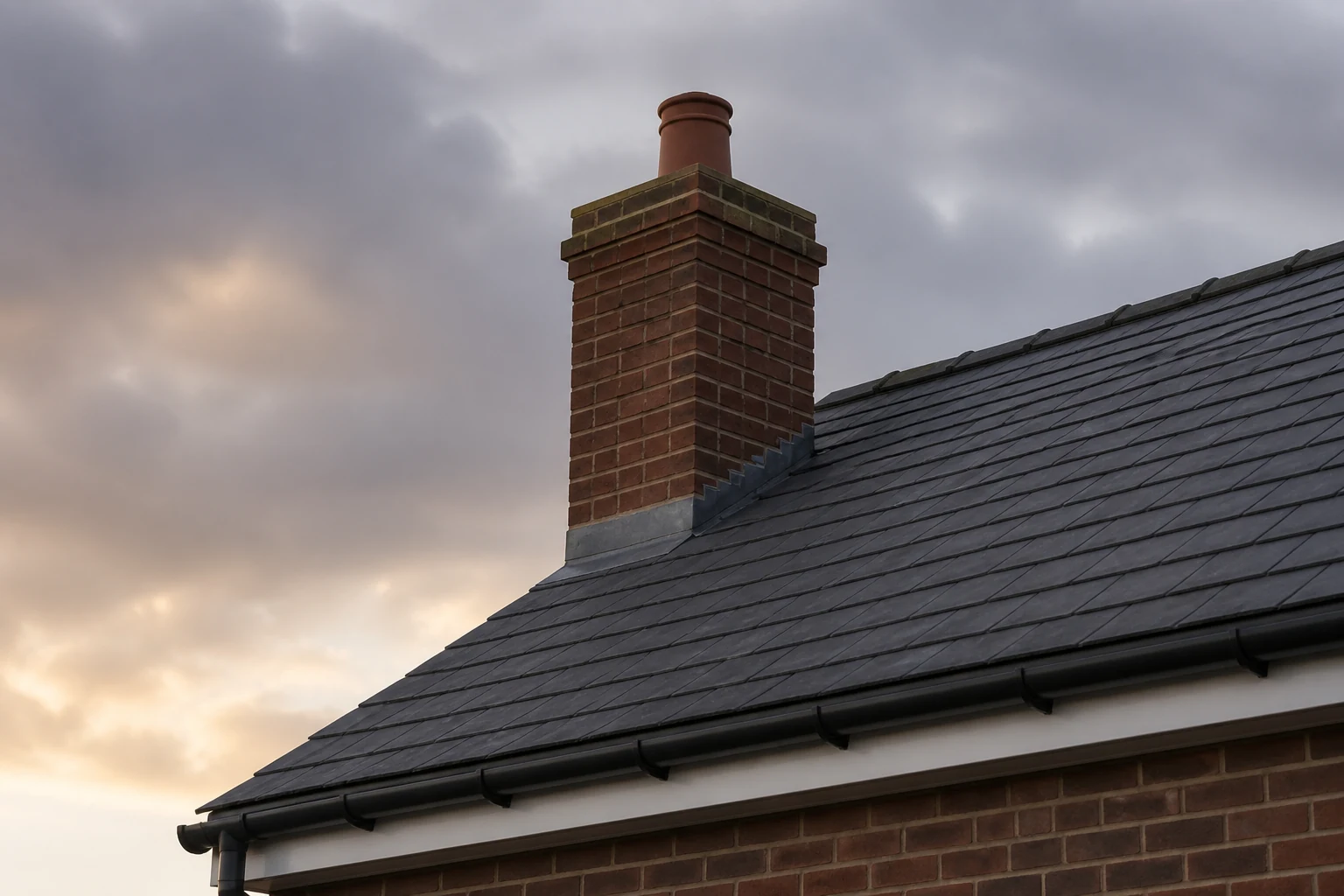
It is sensible to arrange an inspection if you can see open joints, loose mortar, staining indoors, damp chimney masonry or debris that appears to have come from the stack. It is also wise after severe weather if the chimney already looked worn or if the property has had previous leaks around the same area.
A professional roofer can check the chimney safely, look for related defects and explain what level of repair is appropriate. Sometimes targeted repointing is enough. In other cases, the best answer may include flaunching repairs, replacement pots, leadwork attention or repairs to the roof covering around the stack.
The key is to act while the problem is still manageable. Chimney pointing is a practical maintenance measure that helps protect the roofline from avoidable water entry. It supports the structure, improves weather resistance and gives the roof a better chance of staying dry through changing conditions.
If there are already signs of a leak, do not assume the visible damp patch tells the full story. The chimney should be checked as a complete feature, from the top of the stack down to the roof junction and the materials surrounding it.
- Chimney pointing protects the joints between masonry and helps stop rain soaking into the stack.
- Leaks near chimneys are not always caused by flashing alone. Mortar, flaunching, pots and roof coverings may all play a part.
- Early signs include cracked mortar, loose debris, damp staining and vegetation growing from joints.
- Proper repointing involves preparing the joints and using suitable mortar, not just covering the surface.
- A full roofline inspection helps identify whether the chimney, roof covering or drainage details also need attention.
Frequently asked questions
Can damaged chimney pointing really cause a roof leak?
Yes. Open or crumbling mortar joints can let rain enter the chimney stack. From there, moisture may travel into the roof structure or appear indoors near the chimney breast or ceiling.
Is chimney repointing the same as chimney repair?
Repointing is one type of chimney repair. A full chimney repair may also involve flaunching, pots, leadwork, loose masonry or nearby roof coverings, depending on what the inspection finds.
How do I know if the leak is from pointing or flashing?
It is often difficult to tell from inside the property. A roofer will usually inspect the masonry joints, leadwork, roof covering and top of the stack before confirming the cause.
Should I wait until water comes through before repairing chimney pointing?
No. If the mortar is visibly failing, arranging an inspection early can help prevent water entering the chimney and reduce the chance of wider roof damage.
Concerned about your chimney?
If your chimney pointing looks worn or you have noticed damp near the roofline, Proper Roof can inspect the stack and recommend a clear, practical repair.