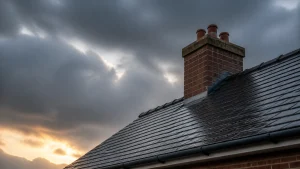
Fascias sit at one of the hardest working parts of a roof. They support the lower edge of the roof, help carry guttering, and shield the roof space from weather, debris and pests.
When guttering is out of line, water stops travelling cleanly to the outlet. It can spill backwards, run over the front, soak the fascia board and create the damp conditions that lead to staining, swelling and decay.
Why gutter alignment matters at the roof edge
A gutter is not just a channel fixed to the fascia. It is a controlled water path. Rain should leave the roof covering, drop into the gutter, move steadily towards an outlet, and pass into the downpipe without sitting against the roof edge.
For that to happen, the gutter needs the right fall, firm brackets and a clear route. If one section dips, twists or pulls away, water collects where it should not. During heavy rain, that trapped water can rise high enough to lap against the fascia or overflow in the wrong place.
Fascia boards are designed to face weather, but they are not meant to stay wet for long periods. Persistent wetting can affect paint finishes, joints, fixings and timber beneath. On some homes, the first visible sign is a dark line below the gutter. On others, the problem is hidden until the fascia feels soft or the gutter brackets no longer hold properly.
Good alignment protects the roof edge by keeping water moving. It also reduces strain on joints and outlets, because the gutter is doing the job it was fitted to do.
How poor gutter fit leads to damp fascia damage
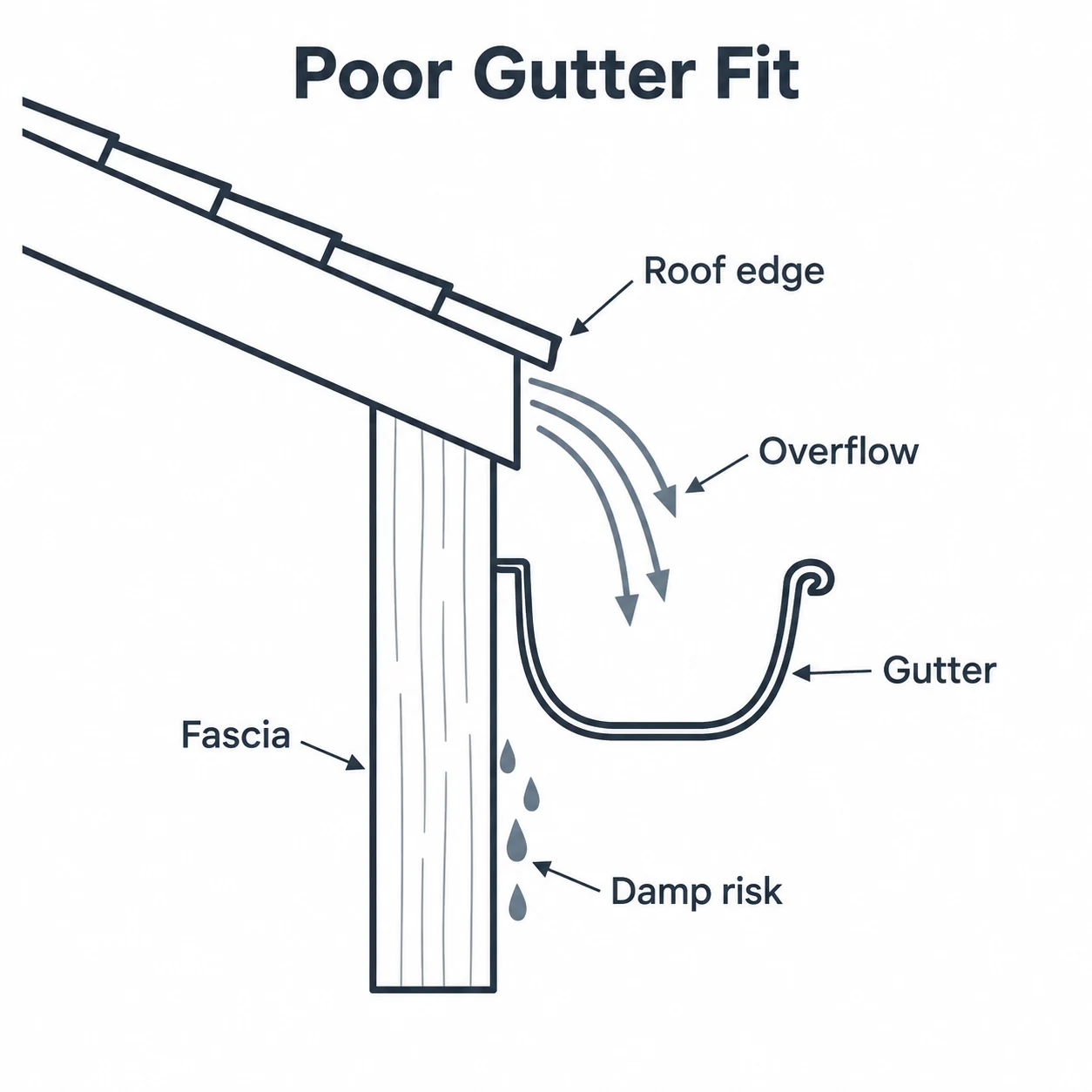
There are several ways a misaligned gutter can put fascias at risk. A gutter that falls away from the outlet may hold standing water. A section that has sagged between brackets may overflow at its lowest point. A run that has pulled forward can allow water to pass behind it, directly onto the fascia.
Behind the gutter is the most important area to watch. If rainwater tracks down the back of the gutter, it can soak the upper face of the fascia and creep into joints. This is often worse than obvious overflow at the front, because it is less visible from ground level.
Gutter joints can add to the problem. If the gutter has shifted out of true, seals may not sit squarely. Water then escapes at the joint, drips onto the fascia and repeats the same wetting pattern every time it rains. Over time, this can damage paint, stain the board and encourage rot where timber is present.
The issue is not always caused by poor installation. Fascia movement, loose brackets, blocked outlets, heavy debris and weather exposure can all alter the line of a gutter. That is why regular checks matter, even when the guttering looked correct when it was first fitted.
Signs your gutters may be affecting your fascias
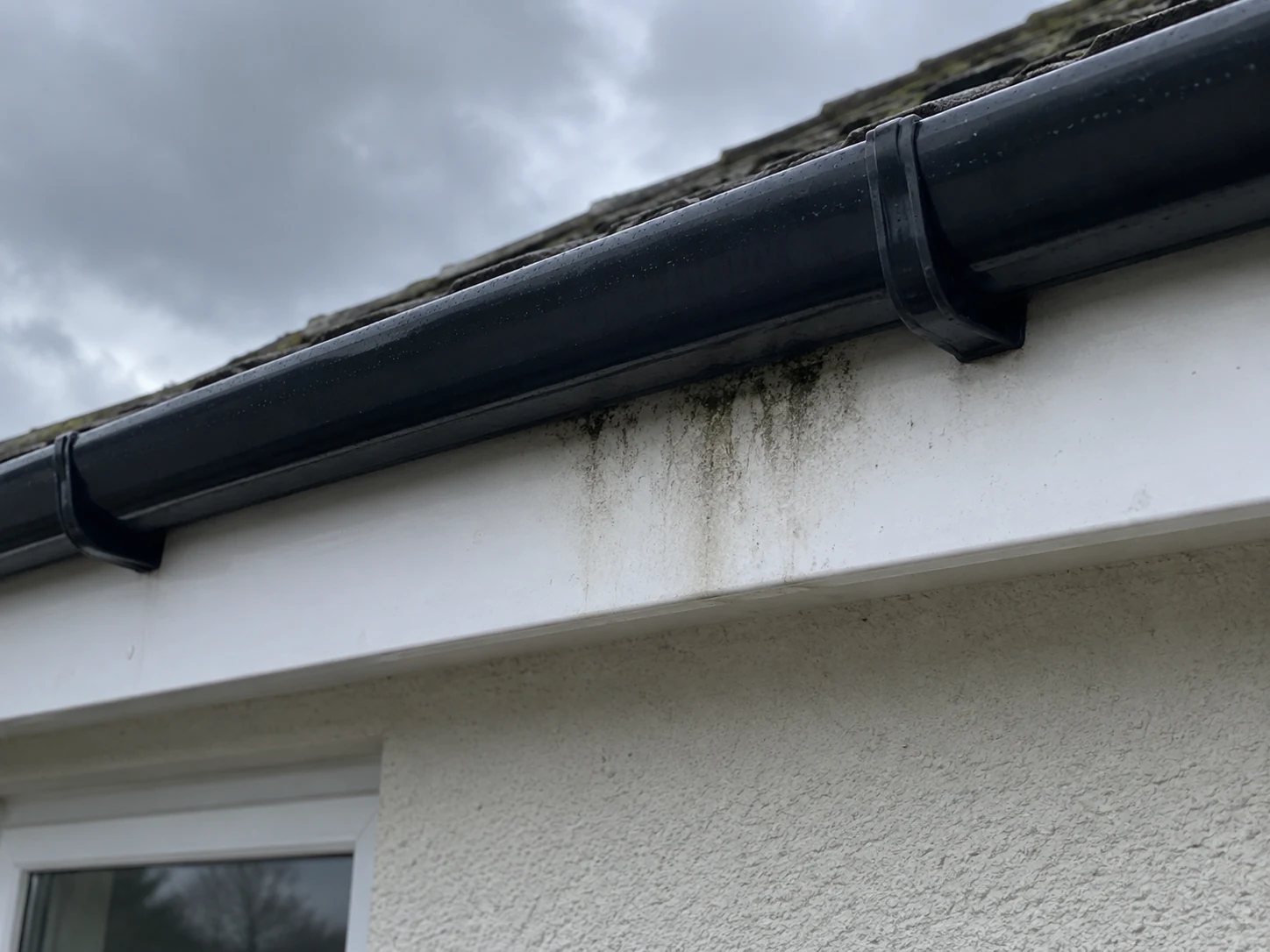
You do not need to climb ladders to spot many warning signs. A ground level check after rain can tell you a lot. Look for water dripping from joints, overflowing from one section, or running down the wall beneath the fascia. If one patch stays wet after the rest has dried, it deserves attention.
Other signs include peeling paint, green staining, brown marks, swollen edges, loose brackets and sections of gutter that look wavy rather than straight. If the gutter appears to lean forward, water may be spilling over the front or escaping behind the back edge.
Blocked downpipes can mimic alignment problems, because water cannot leave the run quickly enough. The difference is that a blockage often causes overflow near the outlet, while poor alignment may cause water to collect away from it. In practice, both can happen together.
Inside the roof space, damp smells, stained timbers near the eaves or signs of water tracking can also point towards a roof edge problem. These symptoms can have more than one cause, so it is sensible to look at the wider roof detail rather than assuming the gutter alone is responsible.
If you are already seeing staining or movement around the roof edge, Proper Roof explains the wider role of fascias, soffits and gutters and how these parts work together to protect the property.
What proper gutter alignment should achieve
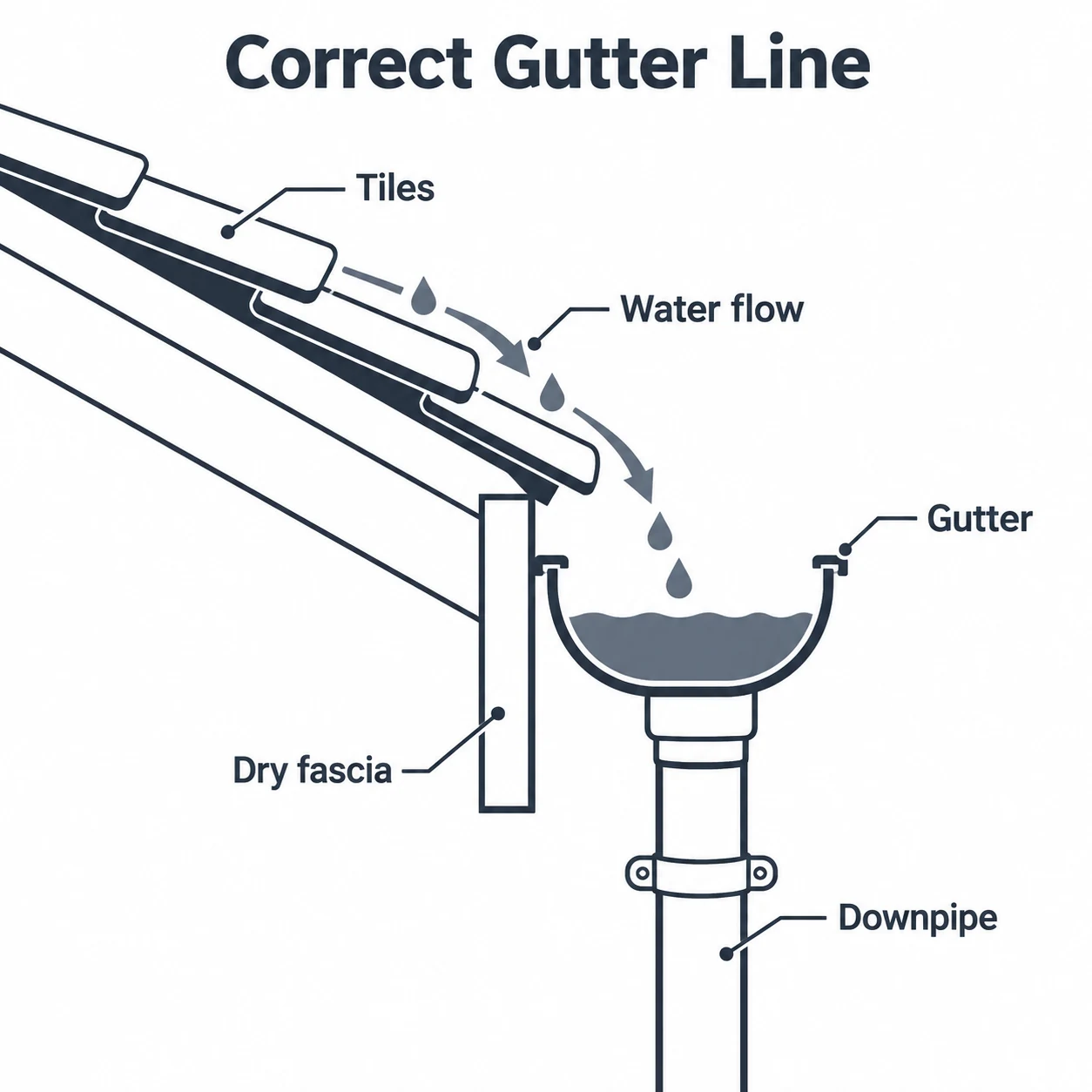
A well aligned gutter should look neat, but appearance is only part of the job. The real test is how it handles water. Rain should enter the gutter cleanly, flow towards the outlet, and clear without pooling for long periods.
The fall needs to be enough to move water, but not so severe that the gutter looks uneven or struggles at the far end. Brackets should be close enough to prevent sagging, especially near joints, outlets and corners. The back edge should sit in the correct position below the roof covering so water drops into the channel rather than slipping behind it.
Gutter capacity matters too. A narrow or poorly positioned gutter may struggle on roof slopes that shed water quickly. Corners, valleys and roof details can concentrate rain into specific areas, so the alignment must suit the way water actually reaches the edge.
Downpipes are part of the same system. If an outlet is too small, blocked or poorly connected, even a straight gutter can overflow. A proper check looks at the full route from roof surface to drainage point, not just the visible gutter run.
Where chimneys, abutments or complex roof details are nearby, it can also be worth checking whether water is being directed correctly before it reaches the gutter. Problems in these areas may call for specialist attention, such as chimney repair work where weathering or failed details are adding to roof edge wetting.
Maintenance that helps prevent fascia damp
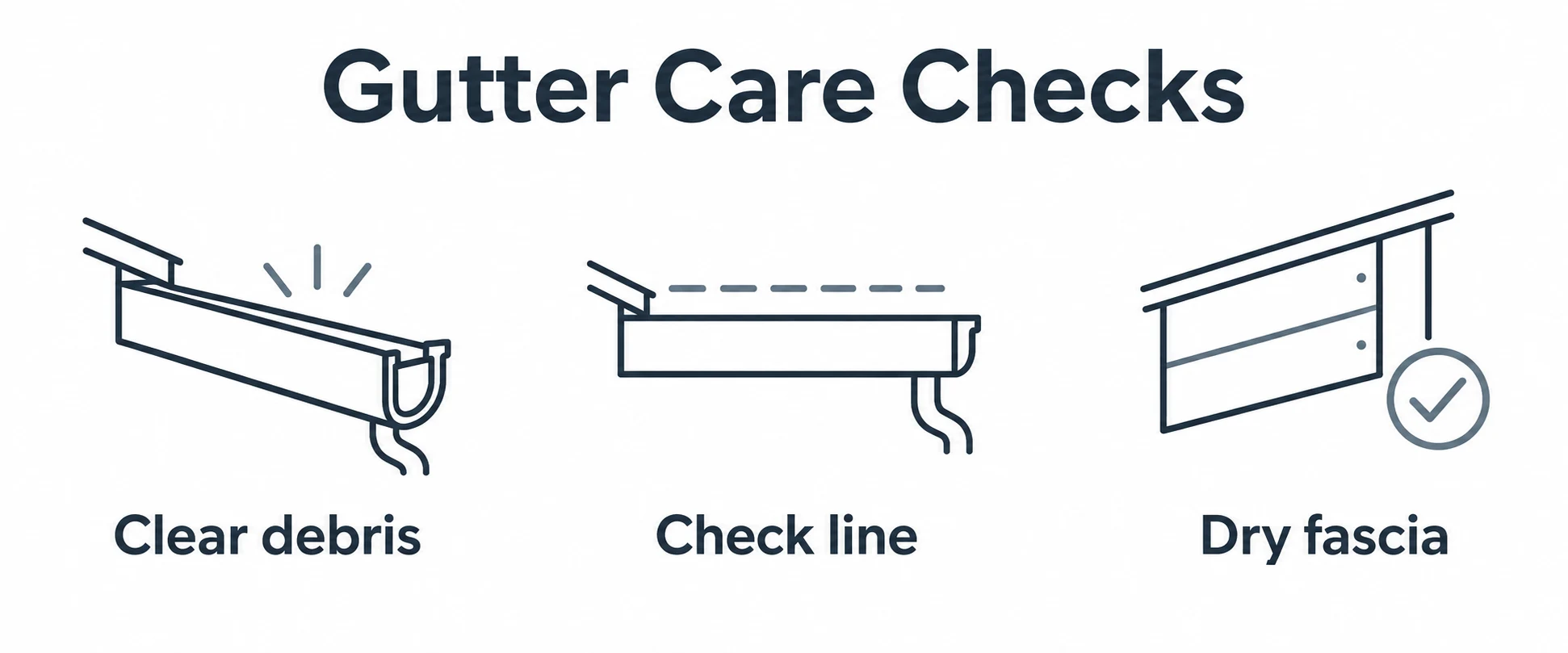
The simplest protection is keeping gutters clear. Leaves, grit, moss and roof debris slow the flow of water and add weight. That weight can pull a gutter out of line, loosen brackets and strain joints.
Cleaning should be paired with a basic alignment check. After debris is removed, the gutter should be inspected for low spots, movement, leaking seals and loose fixings. If water remains in one section after the rest has emptied, the fall may need adjustment.
It is also worth checking the fascia surface itself. Sound paintwork or suitable finish helps shed water, but it cannot compensate for constant overflow. If the board is soft, split or heavily stained, the cause of the water exposure should be dealt with before cosmetic repairs are made.
Older properties may need extra care because roof edges are often less uniform, and past repairs can leave mixed materials or altered falls. In those cases, a careful approach to roof detail matters. Proper Roof also covers heritage roofing where traditional materials and roof edge details need thoughtful handling.
For many homes, a small correction at the right time can prevent a much larger problem later. Refitting a loose bracket, reseating a joint or improving the fall can stop repeated wetting before the fascia deteriorates.
When to ask a roofer to inspect the gutter line
Call a roofer if water is running behind the gutter, if brackets are pulling away, if the fascia feels soft, or if the same section overflows after cleaning. These are signs that the issue may involve more than surface debris.
A roofer can check whether the fascia is strong enough to hold the gutter securely. If the board has decayed, simply refixing the gutter may not last. The underlying support needs to be sound so brackets stay fixed and the gutter keeps its shape.
Professional inspection is also useful after stormy weather, especially where gutters have shifted or joints have started leaking. Roof edge components work as a set, so the soffit, fascia, gutter, downpipe and lower roof covering should all be checked together.
If widespread roof edge movement is linked to broader roof condition, a roofer may recommend looking beyond the guttering. Where a roof is reaching the end of its serviceable life, it can be useful to understand the options for new roofs as part of a wider plan for the property.
- Gutter alignment protects fascias by moving rainwater cleanly towards outlets.
- Water running behind a gutter is one of the clearest warning signs for fascia damp.
- Cleaning gutters helps, but sagging sections, loose brackets and poor fall also need attention.
- Fascia staining, swelling or softness should be investigated before repainting.
- A full roof edge check should include gutters, outlets, downpipes, soffits and fascia boards.
Frequently asked questions
Can a blocked gutter damage a fascia board?
Yes. A blockage can cause water to sit in the gutter or overflow against the fascia. If this happens repeatedly, the board and its finish can deteriorate.
How can I tell if my gutter is out of alignment?
Look for standing water, overflowing in one spot, leaks at joints, sagging sections or water marks beneath the gutter. These signs often point to poor fall or movement.
Should fascias be replaced if the gutter has been leaking?
Not always. If the fascia is still sound, correcting the gutter fault and protecting the surface may be enough. If it is soft, split or badly decayed, replacement may be needed.
Is gutter alignment a roofing job or a maintenance job?
It can be both. Clearing debris is routine maintenance, but adjusting fall, securing brackets and checking fascia condition are best handled by a roofer.
Need help with your roof edge?
If your gutters are overflowing, leaking behind the run or leaving marks on the fascia, Proper Roof can inspect the roof edge and recommend a clear fix.