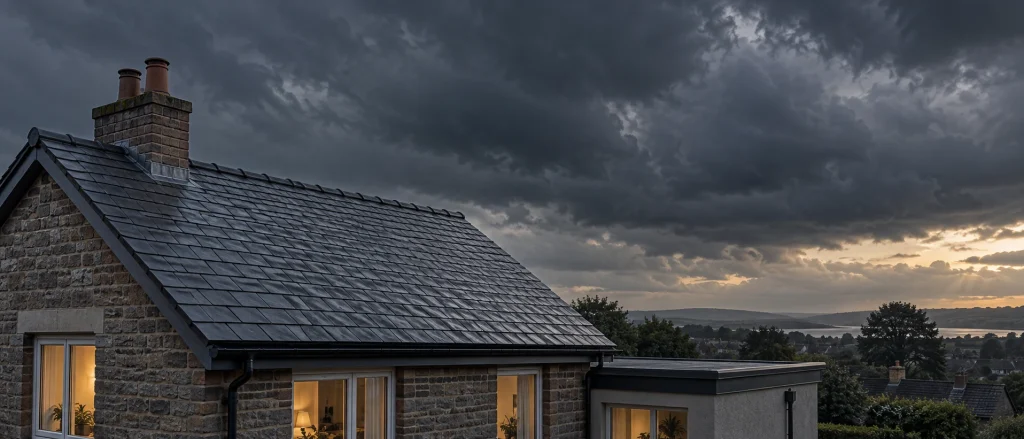
When something goes wrong with a roof, the biggest question is often not what has failed, but how far the work needs to go. A slipped tile, damp patch or damaged flashing may look simple from ground level, yet the right answer depends on what is happening across the whole roof.
A good roofer will not jump straight to the largest job or the quickest patch. They will assess the roof as a working system, then explain whether targeted repair, wider restoration or reroofing is the better fit for the property.
What roofers look at first
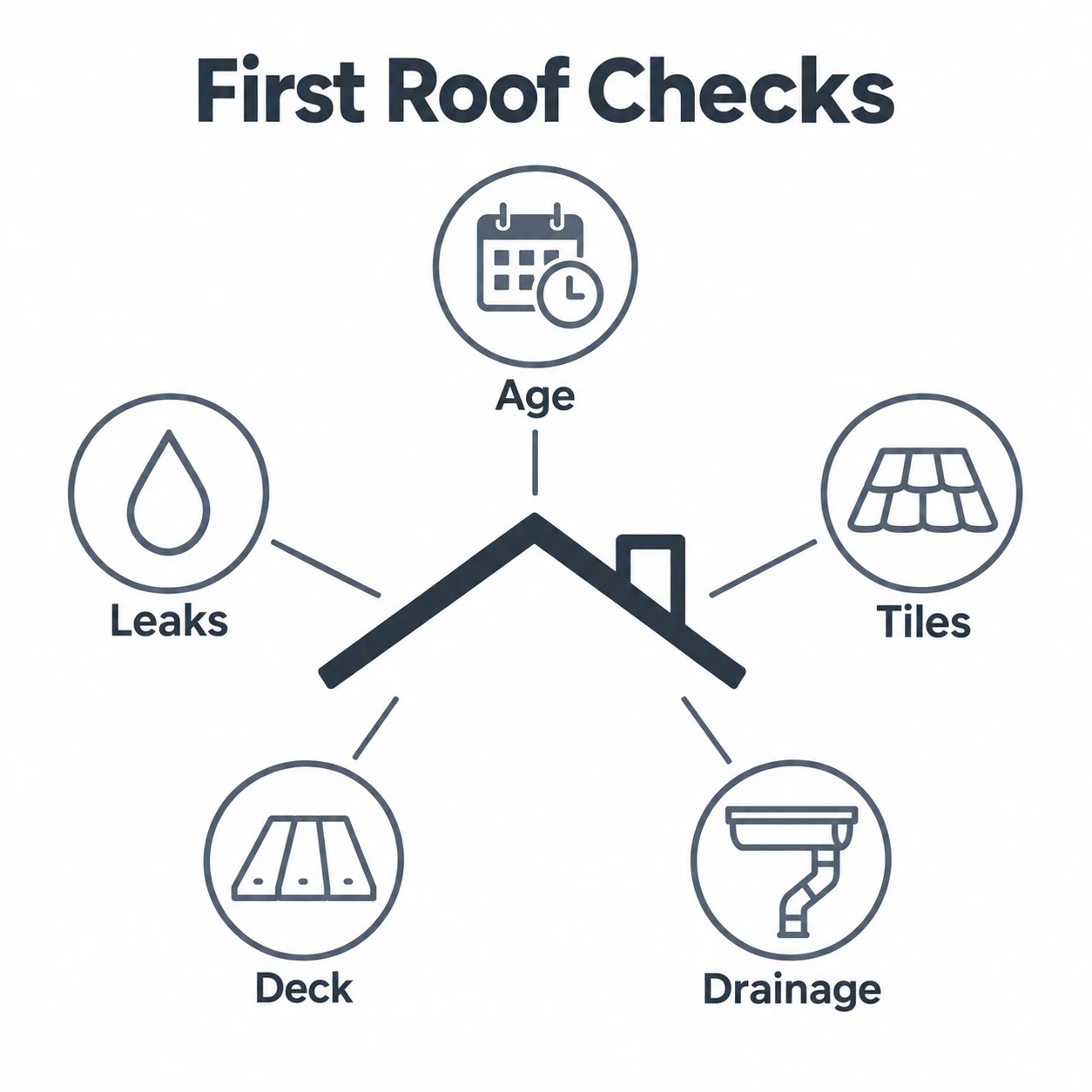
The first stage is usually a visual and practical assessment. A roofer will look at the roof covering, ridge details, valleys, verges, flashings, chimney junctions, gutters and any signs of movement or water entry. They are checking whether the problem is localised or part of a wider pattern.
For example, one missing slate after bad weather may be a straightforward repair if the surrounding roof is sound. Several slipped slates, soft battens, failing fixings and repeated leaks tell a different story. In that case, the visible issue may only be the part the homeowner can see.
The inside of the property can be just as useful. Damp staining, mould, damaged plaster, musty smells and daylight showing through the roof space all help build a picture. A roofer may also check ventilation, insulation contact, roof felt condition and timber health. These details matter because a leak is not always directly above the stain below it.
This is why Proper Roof places roof repairs and reroofs together as related services. If you want to understand the practical options, their roof repairs and reroofs service explains how both routes can be considered depending on the roof condition.
When a targeted repair is usually the right fit
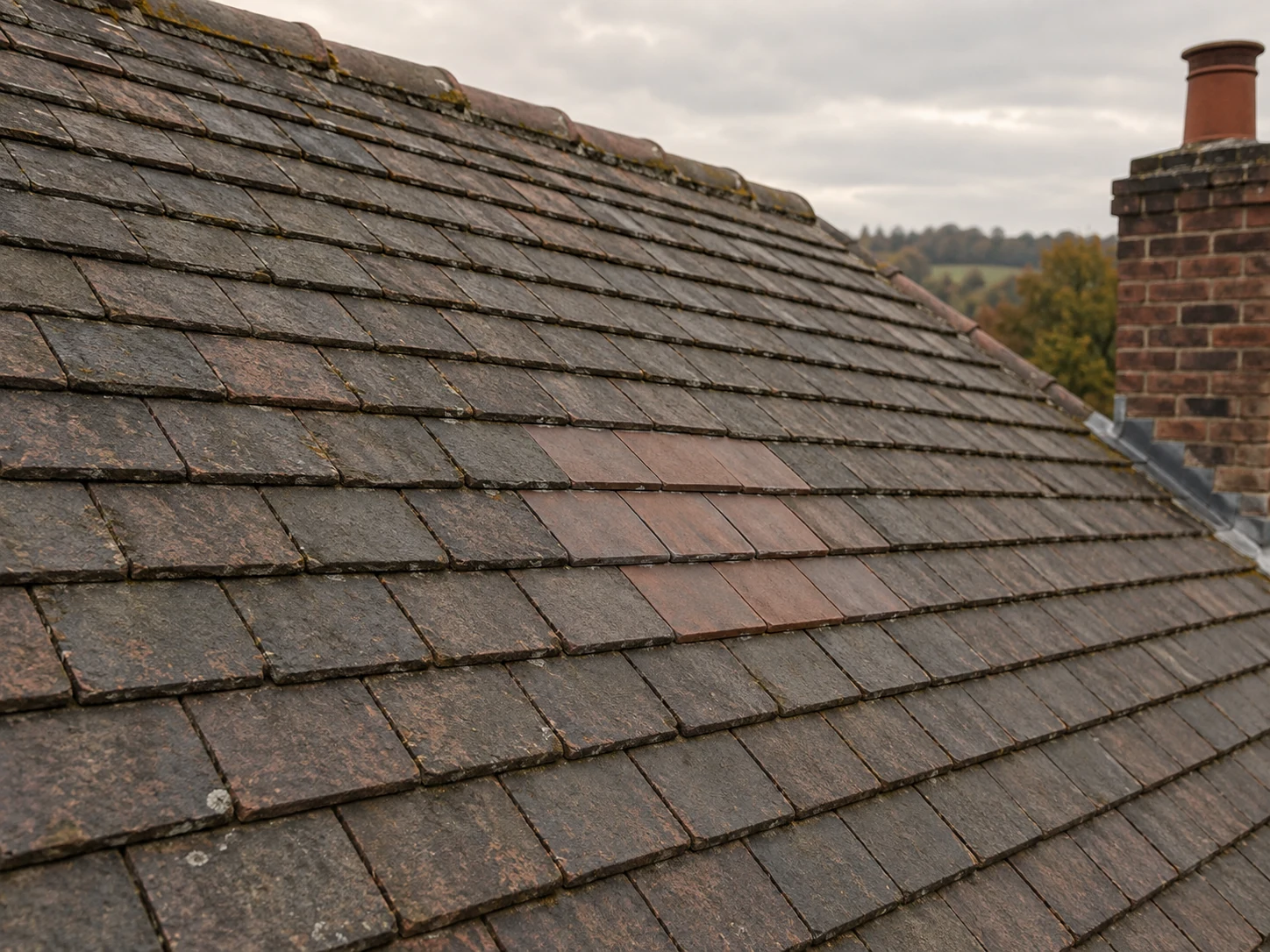
A targeted repair is often suitable when the main roof is still performing well and the fault has a clear cause. That might include a cracked tile, lifted flashing, blocked outlet, isolated storm damage, a small section of failed mortar or a leak around a specific roof detail.
The key word is isolated. If the materials around the fault are still strong, correctly fixed and not close to the end of their useful life, repairing the affected area can restore weather protection without disturbing more of the roof than necessary.
A proper repair should still go beyond covering the obvious hole. The roofer needs to trace the entry point, check the surrounding materials and make sure water can drain away as intended. This is especially important around valleys, abutments, chimneys and roof edges, where several materials meet and small defects can create persistent leaks.
Homeowners sometimes worry that a repair sounds too minor to be reliable. In reality, a carefully diagnosed repair can be exactly the right solution. The important part is that it addresses the cause, not just the symptom. Proper Roof has a useful explanation of why professional roof repairs go beyond a visible patch, which is a helpful read if you have had the same leak return more than once.
When reroofing becomes the more sensible option
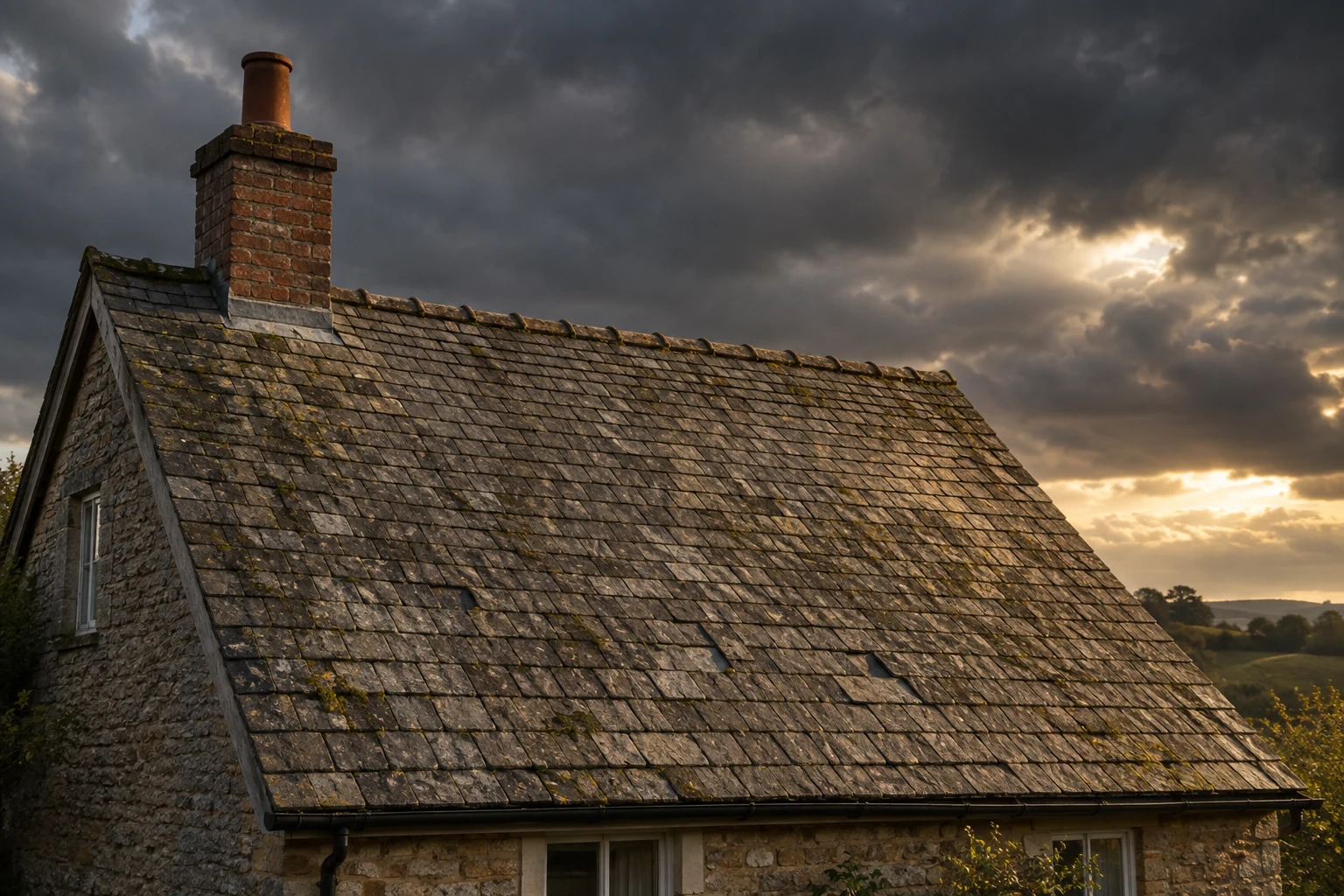
Reroofing becomes more relevant when the roof has widespread deterioration, repeated failures or materials that no longer have enough reliable life left in them. The issue may start with a leak, but the assessment may reveal brittle tiles, loose fixings, aged felt, poor previous workmanship or failing timber support.
In these cases, repeated spot repairs can become less effective because each new fault is only part of a bigger pattern. A roofer may still be able to make an urgent repair to keep the property protected, but they should be honest if wider renewal is likely to give a better result.
Reroofing can also be the right fit when several connected elements need attention at the same time. Roof coverings, underlay, battens, ventilation, flashings and roofline details all work together. Renewing only one part may not solve the underlying weakness if the rest of the system is failing.
This does not mean every older roof needs replacing. Some older roofs are well built and respond well to skilled repair. The decision should be based on evidence, not age alone. A good roofer will show what they have found, explain the risks of each option and help the homeowner choose a route that protects the property properly.
How roofers compare cost, value and disruption without overselling
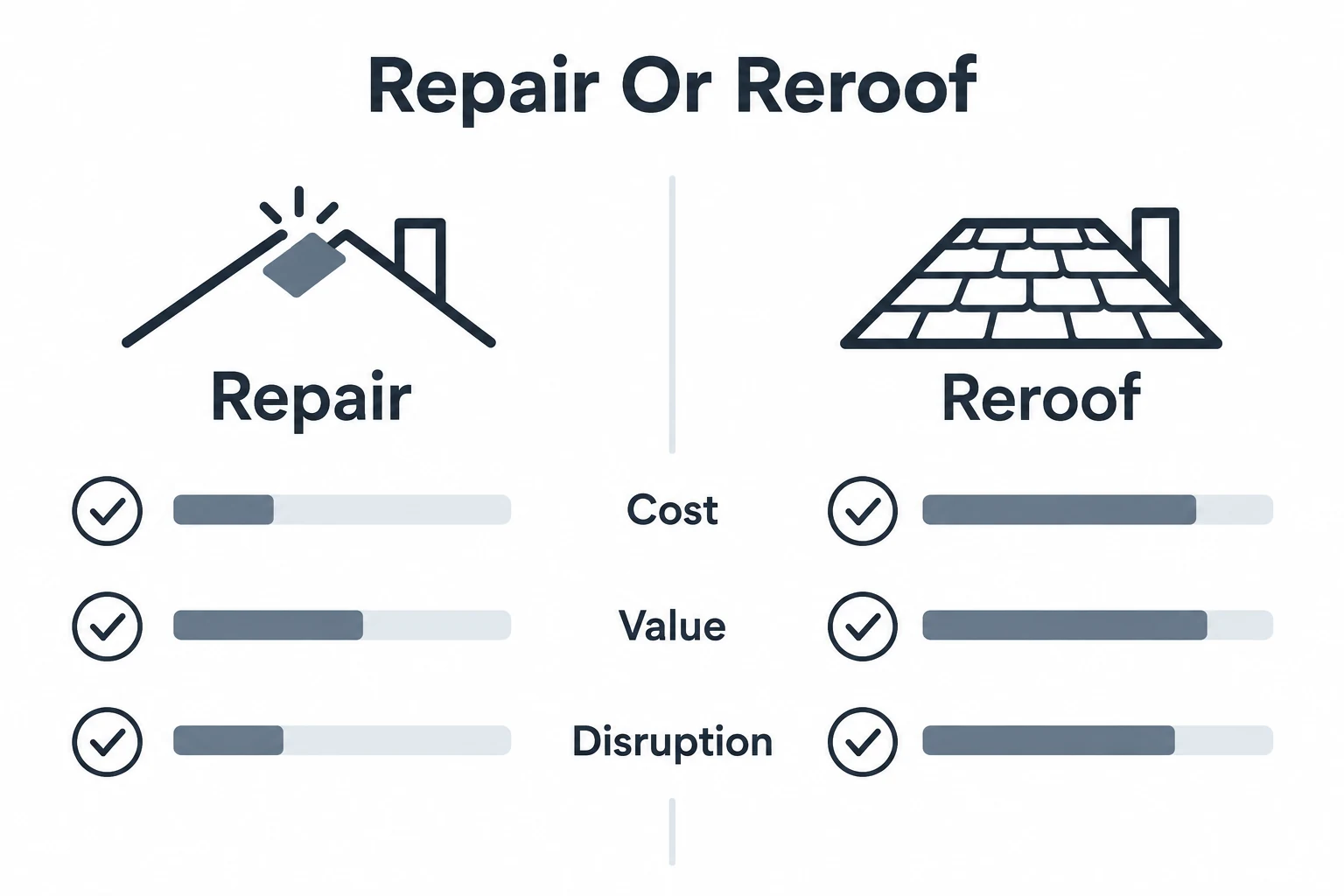
A trustworthy assessment balances immediate need with future value. The roofer should explain what a repair is expected to achieve, what it will not solve and how likely the roof is to need more work later. They should also explain what reroofing would improve beyond the visible defect.
That conversation is not just about price. It is about whether money spent now is solving the right problem. A smaller repair may be excellent value if it restores a sound roof. Wider renewal may be better value if it prevents repeated visits, protects internal finishes and updates key layers of the roof at the same time.
Good roofers also consider timing. If water is entering the property, the first priority is protection. Temporary or targeted work may be needed before a larger plan is agreed. If the roof is stable but nearing a bigger decision point, the roofer can help the homeowner weigh repair now against planned renewal.
It is worth being cautious with simple rules of thumb. Roofing decisions depend on materials, exposure, workmanship, roof shape and the condition of hidden layers. For a broader look at assumptions that can lead people in the wrong direction, Proper Roof has covered common roofing myths that cost homeowners money.
Why related roof details can change the recommendation
Sometimes the deciding factor is not the main roof covering at all. Chimneys, leadwork, fascias, soffits, gutters and ventilation can all affect whether repair or wider work makes sense. A roof may look worn because rainwater is not being managed properly, or a leak may be linked to a junction rather than the tiles themselves.
Chimneys are a common example. Failed pointing, cracked flaunching, loose pots or worn flashings can allow water in even when the surrounding roof covering is in reasonable condition. In that situation, chimney work may solve the problem without reroofing. If the chimney defects sit alongside broader roof failure, they may be included within a wider programme of work. Proper Roof has a separate guide to chimney repairs for homeowners who suspect the leak is coming from that area.
Roofline components matter too. Fascias, soffits and gutters help move rainwater away from the building and support the edges of the roof. If gutters overflow, if timber edges are damaged or if ventilation is poor, symptoms can appear in ways that seem like roof failure. A careful assessment checks these details before recommending the scale of work.
This joined up view is what separates useful roofing advice from guesswork. The best recommendation is rarely based on one broken tile or one damp mark. It comes from understanding how the whole roof is performing, what has failed, what still has life left in it and what will give the homeowner a dependable result.
- A repair is usually best when the fault is isolated and the surrounding roof is sound.
- Reroofing becomes more sensible when deterioration is widespread or repairs are becoming repetitive.
- A proper assessment checks roof coverings, flashings, chimneys, gutters, ventilation and the roof space.
- The right choice should be based on evidence, not pressure or guesswork.
- Good advice explains both what each option solves and what it cannot solve.
Frequently asked questions
Can a roofer tell from the ground whether I need a repair or reroofing?
They may spot obvious clues from the ground, but a reliable recommendation usually needs closer inspection. Photos, roof access and checks inside the roof space can reveal whether the issue is isolated or part of wider deterioration.
Is a leak always a sign that the whole roof needs replacing?
No. Many leaks are caused by a local fault such as damaged flashing, a slipped tile or a problem around a chimney. The wider condition of the roof determines whether repair is enough.
Should I keep repairing an older roof?
Sometimes, yes. If the structure and surrounding materials are sound, repair can be a sensible option. If faults are becoming frequent or the roof covering is failing across large areas, reroofing may offer better value.
What should a roofer explain before I decide?
They should explain what they found, where water or damage is coming from, which options are available and what each option is expected to achieve. Clear evidence makes the decision much easier.
Need clear roofing advice?
If you are weighing up repair against reroofing, Proper Roof can assess the roof properly and talk you through the most sensible next step.